
In print finishing, small details often make the difference. A faulty sheet in the book block or brochure can turn a clean print run into expensive spoilage. In such cases, however, the damage often extends beyond the mere material value or diminishing margins: every error means a loss of trust and, in the worst case, can even lead to the loss of important customers.
Therefore, more and more printing companies are asking themselves: Can faulty sheets in saddle stitchers and perfect binders be automatically detected? Can an incorrect sequence of folded sheets in the book block or brochures be systematically ruled out? The answer to both questions is yes. Our retrofitting of a “PPL Eagle” camera system for Nunnenmann GmbH shows how this is achieved in practice – but more on that later.
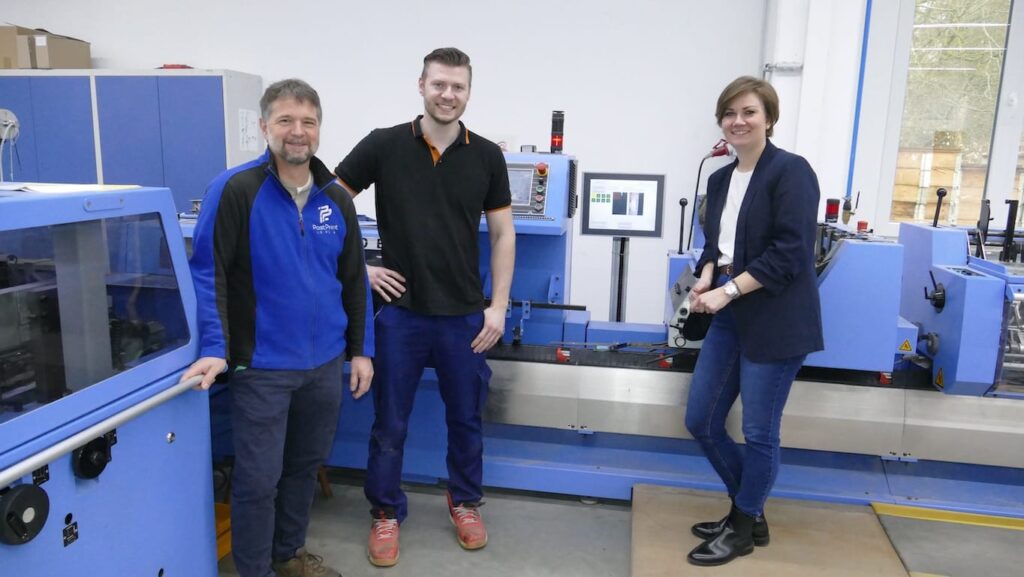
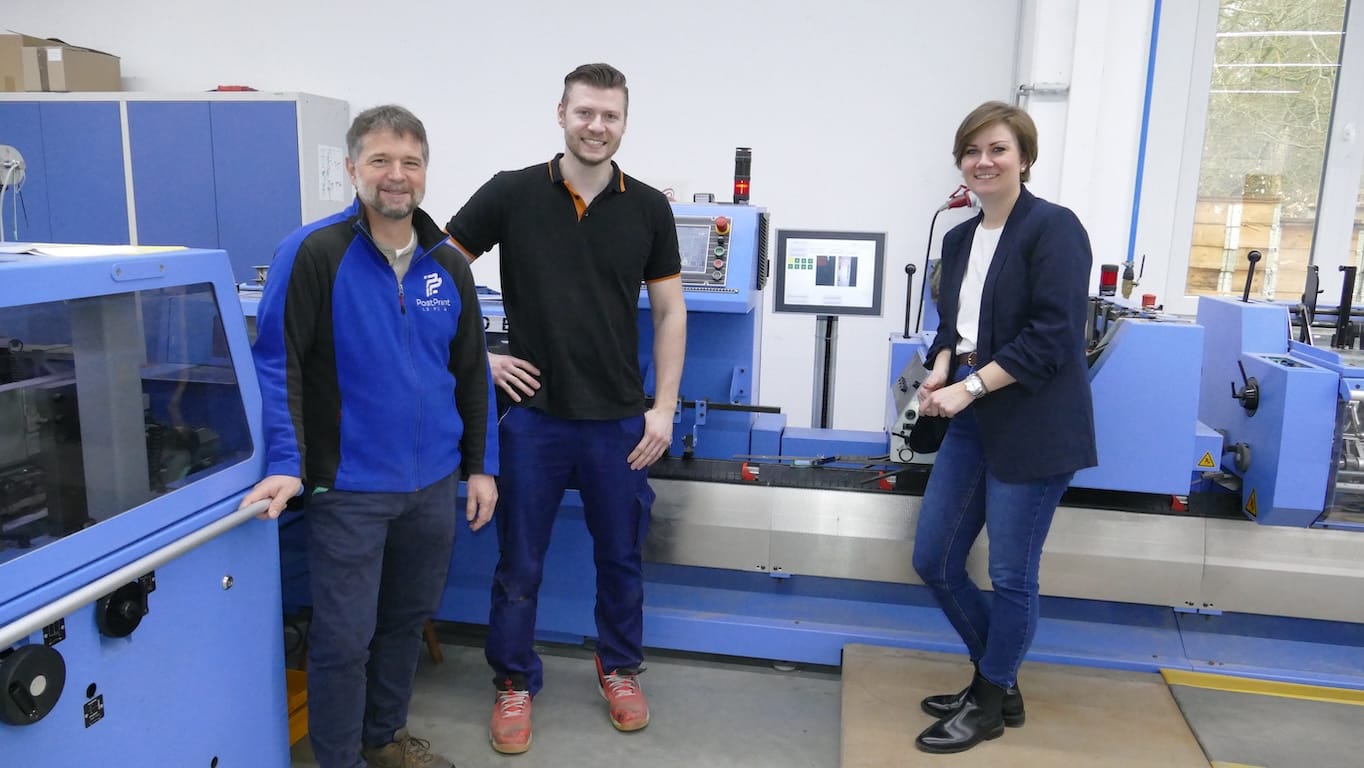
From left: PPL Managing Director Jan Schölzel with Michael and Melanie Nunnenmann at the saddle stitcher equipped with the “PPL Eagle” camera monitoring system.
Low setup effort thanks to fast, automated processes
The importance of camera systems in print finishing is still underestimated. Yet, everyone makes mistakes, especially in a production environment where decisions often have to be made under time pressure. Our camera system acts as an additional safety net: continuous optical control enables companies and their employees to detect errors before they become costly. The reason why some printing companies are still skeptical about retrofitting is simple: they fear high setup efforts. However, this argument can be easily refuted: we have established fast, automated teach-in processes, and different areas on the sheets can be set up separately. This shortens the time until production starts.
What our industrial “PPL Eagle” camera system offers
“PPL Eagle” is an in-house development by PostPrintLeipzig. We have already exhibited the system, specifically designed for perfect binders, gathering machines (ZTM), and saddle stitchers, at international trade fairs such as DRUPA, and it is already in use by more than 10 customers, including in the highly competitive US market.
The camera system
- monitors the sheet sequence on perfect binders, ZTMs, and saddle stitchers.
- detects missing or incorrectly inserted folded sheets and
- points out swapped language versions.
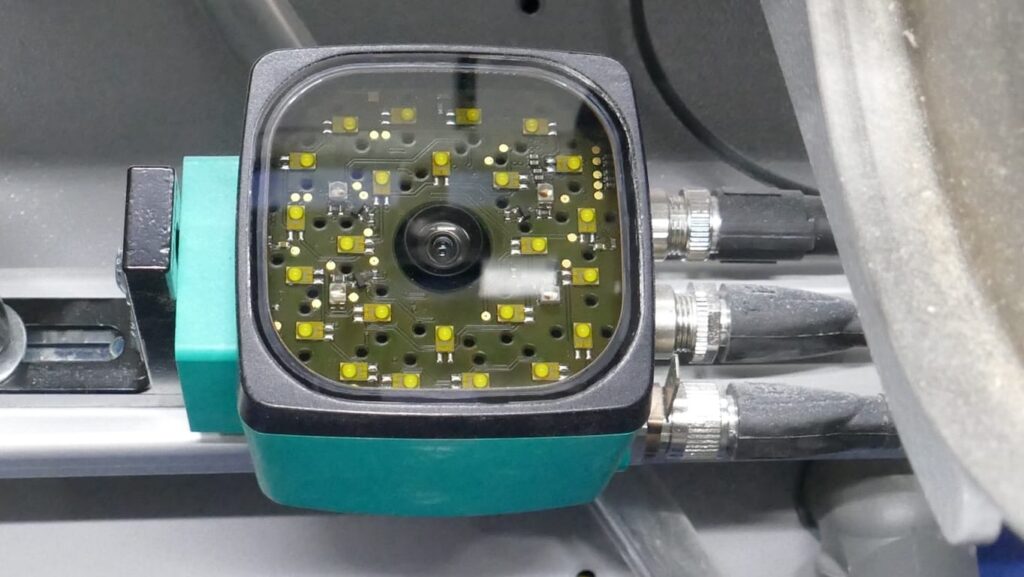
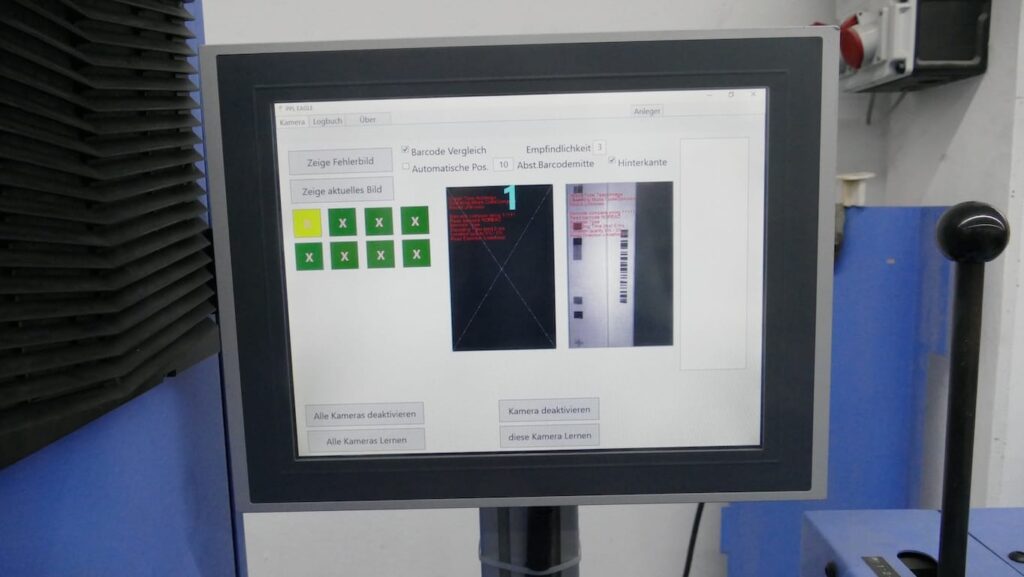
One camera is installed per feeder or station, capturing images and/or barcodes. If an error is detected, the machine stops or ejects faulty sheets. The log files generated afterwards serve as reliable evidence for audits. In addition, the responsible parties always have the LOG file available, so that nothing is forgotten.
Users of our camera systems can choose between two operating modes: optical comparison using image recognition and barcode recognition. Both modes include automated “learning” of parameters such as exposure, contrast, and position.
The solution is not only relevant for printing companies but for all businesses and service providers committed to zero-defect tolerance – for example, players in the pharmaceutical industry. The eagle eyes of “PPL Eagle” detect errors before they can have consequences. However, all customers benefit from the systematic optical control of printed sheets before binding, even in less sensitive areas: once installed, the solution generally raises a provider’s quality level.
Maximum product safety on the saddle stitcher: Case Study Nunnenmann GmbH
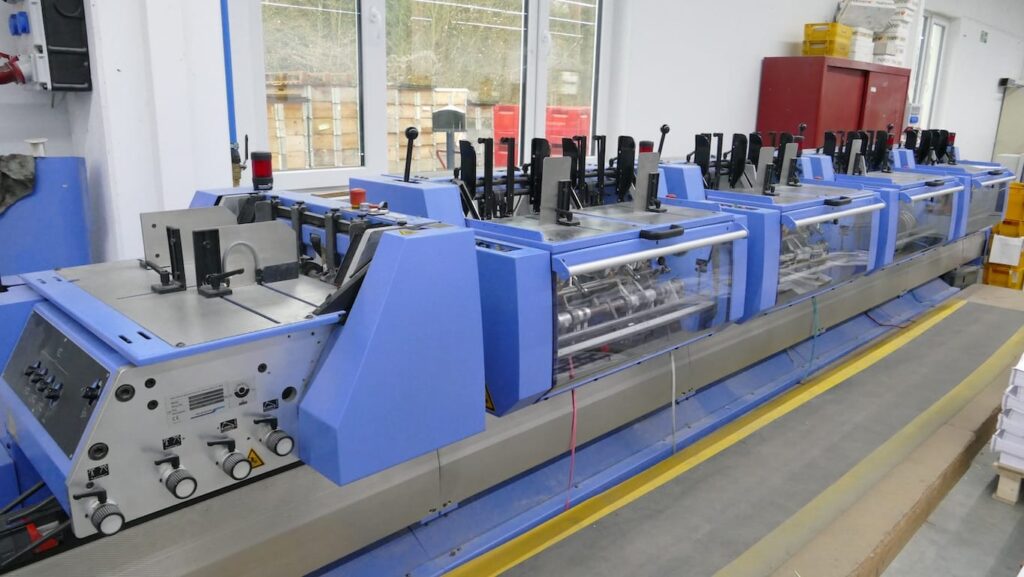
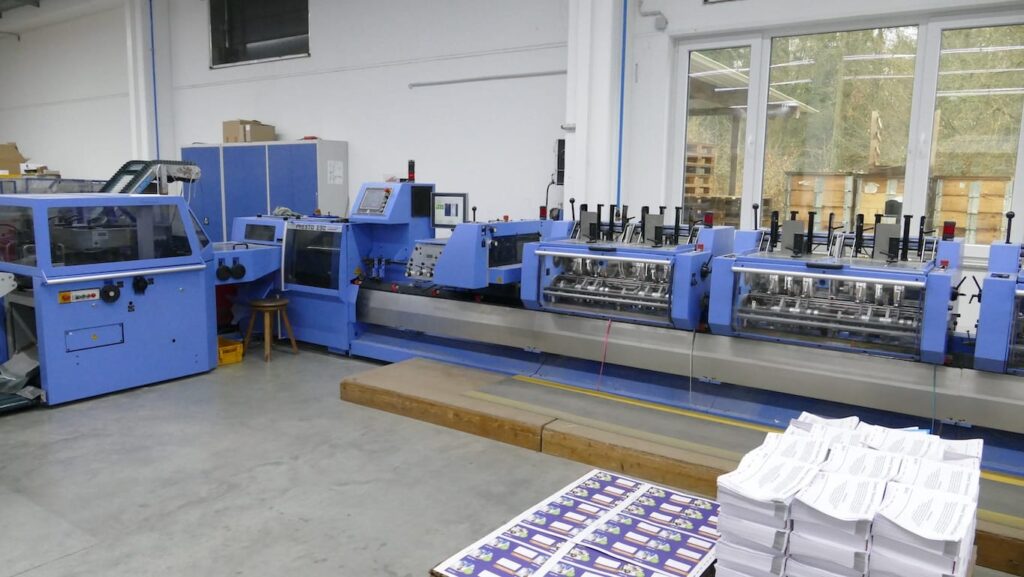
Our reference project with Nunnenmann GmbH also demonstrates this. Founded in 1986 in Herxheim near Landau in the Palatinate, the company adheres to high-quality standards, evidenced by numerous certifications in recent years (ISO 9001; FSC; Blue Angel). Production manager Michael Nunnenmann, who has been leading the printing company since April 2026 in the second generation together with his siblings Melanie, Dominik, and Philipp, after founder Dieter Nunnenmann retired, understands quality management as a continuous process. In doing so, he also asked himself how product safety on the Müller Martini Presto E90 saddle stitcher could be further increased. A recommendation led him to PPL, and shortly thereafter, the compact implementation took place: eight Pepperl+Fuchs cameras were retrofitted to the Presto E90, one per station. Additionally, supplementary light sources were installed to enable the cameras to deliver razor-sharp images.
Nunnenmann GmbH’s decision proved to be correct: The spoilage and complaint rates were significantly reduced, and the overall safety of the production process was increased.
Invest in your customers’ trust too!
Do you want to systematically improve the quality of your products and automatically detect faulty insertions and mix-ups in brochures in the future? We would be happy to advise you on retrofitting with an industrial camera system. You can find more about the system on our page about the PPL Eagle camera system.
You can read the detailed technical article on the project in “Grafische Palette”, Issue 2/2026, pp. 142/143.